Wondering if Murfreesboro is a smart place to buy your first rental or add a smaller investment property? The short answer is yes, but only if you go in with clear numbers and realistic expectations. Murfreesboro has real demand drivers, a large renter base, and steady long-term appeal, yet it is not the kind of market where any property will automatically produce strong cash flow. Let’s dive in.
Murfreesboro demand looks real
Murfreesboro continues to grow at a healthy pace. The U.S. Census Bureau estimated the city at 168,387 residents in July 2024, which was up 10.2% from 2020. That kind of growth matters because it helps support housing demand over time.
The city also has a meaningful renter base. Census data shows the owner-occupied housing unit rate at 52.4%, which means a large share of residents rent rather than own. For a small investor, that creates a broader pool of potential tenants than you might see in a more owner-heavy market.
Another major demand anchor is Middle Tennessee State University. MTSU reported 20,812 total students for fall 2025, and nearly 2,700 students moved into campus housing during a three-day period in August 2025 before classes began on August 25. That does not mean every investor should target student rentals, but it does show how important the university is to Murfreesboro’s housing rhythm.
Rent levels vary by property type
If you are evaluating Murfreesboro as an investor, one of the first things to understand is that rents are not uniform across the market. Property type makes a big difference, and broad averages can hide that.
Zillow showed an average rent of $2,049 in April 2026, while Apartments.com reported average apartment rents around $1,300 for one-bedroom units, $1,550 for two-bedroom units, and $1,900 for three-bedroom units in May 2026. The same apartment data also showed average rents of $2,287 for houses, $1,491 for condos, and $1,931 for townhomes. These figures are not directly comparable because they use different methods, but they point in the same direction.
The takeaway is simple: houses and townhomes often command higher rents than standard apartments, while condos can offer a different price-to-rent profile. If you are buying as a small investor, your returns may depend less on the citywide average and more on choosing the right product.
Murfreesboro is not an easy cash-flow market
This is where many investors need to slow down. Murfreesboro appears more balanced than bargain-priced, which means it may be better for disciplined buy-and-hold investors than for anyone expecting instant high returns.
Using Zillow’s March 2026 average home value of $426,292 and average rent of $2,049, the rough gross annual yield is about 5.8% before vacancy and expenses. Using Census median gross rent of $1,481 and median owner-occupied home value of $402,100, the rough gross yield comes in closer to 4.4%. These are only screening numbers, not cap rates, but they help show why many purchases in this market can feel cash-flow-light.
Vacancy also matters. Murfreesboro’s 2025-2029 draft Consolidated Plan reported a rental vacancy rate of 8.7% in 2023, which was above the statewide rate of 6.2%. If you use that as a broad market haircut, a $2,049 asking rent works out closer to about $1,871 in effective monthly rent before expenses.
That does not make Murfreesboro a bad market. It simply means you need to underwrite carefully, avoid overpaying, and leave room for repairs, turnover, and vacancy.
Supply and affordability create a mixed picture
Murfreesboro has demand, but it also has enough supply that pricing still matters. The city’s housing reports show a sharp decline in lower-cost rental options, with just 19.6% of rental units renting for $1,000 or less in 2023, down from 50.4% in 2018.
At the same time, the city reported that rental vacancies rose from 1,136 vacant rental units in 2018 to 2,682 in 2023. That is an important reminder that this is not a market where any unit will lease quickly at any price. Condition, layout, rent level, and location still matter a great deal.
For small investors, this creates both risk and opportunity. The risk is assuming broad population growth guarantees easy leasing. The opportunity is that well-positioned, correctly priced rentals can still stand out when they match what local renters actually want.
The best fit may be 2-3 bedroom properties
Murfreesboro’s housing stock offers an important clue for investors. According to the city’s consolidated plan using ACS data, 54% of residential properties are one-unit detached homes, while only 7% are two-to-four-unit properties.
The rental stock also skews larger. The city reported that 42% of rental units are two-bedroom units and 34% are three-bedroom units or larger, while just 20% are one-bedroom units. That suggests many renters in Murfreesboro are looking for more space rather than the smallest possible unit.
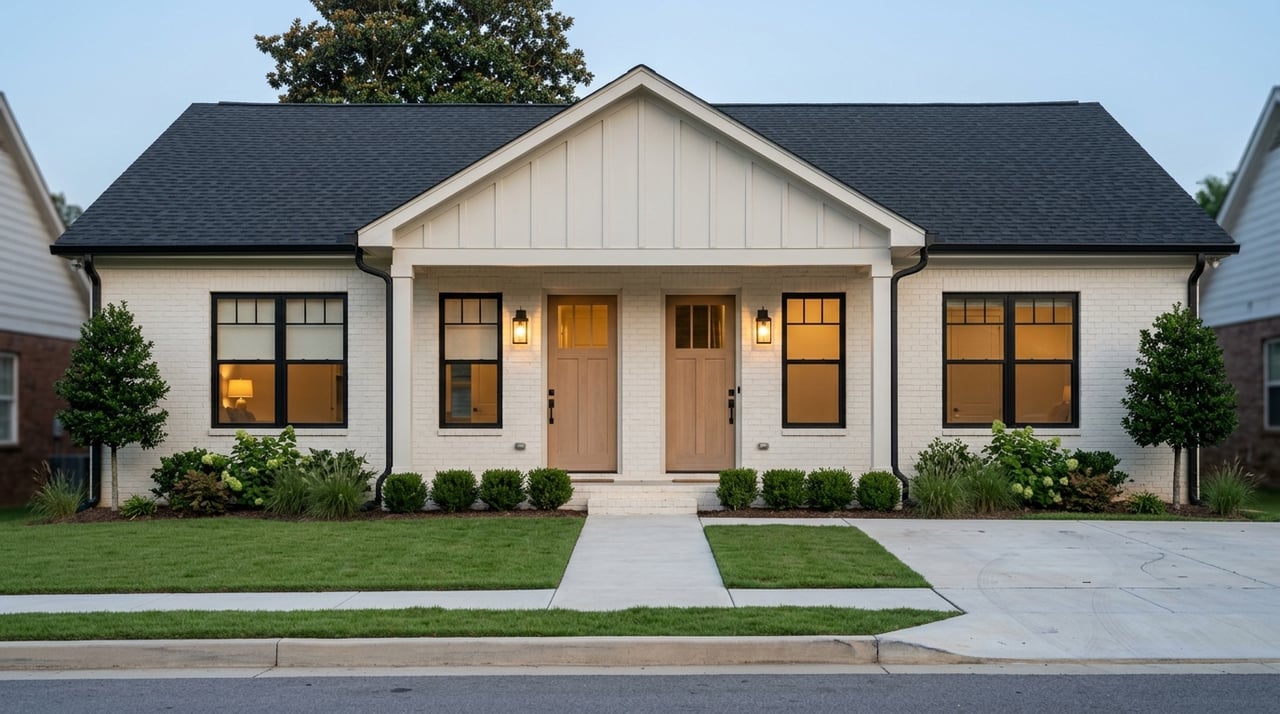
For a small investor, that often points toward a practical buy box: a two- or three-bedroom single-family home, townhome, or condo. That is not an official city recommendation, but it is a reasonable conclusion based on the local housing mix and rental inventory.
Location selection requires real discipline
Not every part of Murfreesboro performs the same way, and citywide averages can hide block-by-block differences. The city’s fair housing analysis identified severe housing problems in Central Murfreesboro, including downtown and inner-city areas, North Murfreesboro near Broad Street and public housing areas, and Southeast Murfreesboro along major transit corridors.
That does not mean you should automatically avoid these areas. It does mean you should be careful about older housing condition, renovation scope, turnover risk, and your specific rent assumptions. For small investors, detailed underwriting matters much more than relying on a broad neighborhood label.
This is especially true if you are considering an older in-town property. Murfreesboro reported that 25% of renter-occupied units were built before 1980, and older homes may require more repairs and capital improvements than first-time investors expect.
Appreciation may still matter more than fast income
If your goal is immediate, strong monthly cash flow, Murfreesboro may feel challenging. If your goal is a more balanced long-term hold with steady demand and potential equity growth, the market may be more appealing.
Recent appreciation data shows that price growth has cooled. Zillow’s March 2026 data showed an average home value of $426,292, up just 0.1% year over year, with a median sale price near $399,014 and homes going pending in about 28 days. That is a very different setup from a market experiencing runaway price growth.
In practical terms, Murfreesboro may reward patience more than speed. Investors who buy well and hold through market cycles may find the city’s population growth, university presence, and broad housing demand more valuable than short-term appreciation spikes.
Management matters more than many buyers expect
A small investment property is not just a purchase. It is an ongoing operation. In Murfreesboro, that operational side can have a big impact on your returns.
The local data points to seasonal leasing around the MTSU calendar, especially late summer. It also points to the importance of budgeting for reserves and turnover, particularly if you buy near student demand or in older parts of town.
That means your business plan should include:
- realistic vacancy assumptions
- maintenance reserves
- turnover and leasing costs
- a clear rent strategy based on property type
- a plan for managing repairs and tenant communication
Many disappointing investment outcomes do not come from bad markets. They come from overly optimistic assumptions, weak maintenance planning, or buying a property that looked good on paper but needed more work than expected.
So, is Murfreesboro a good market for small investors?
Yes, Murfreesboro can be a good market for small investors, but it is best approached as a careful buy-and-hold market rather than an easy cash-flow play. The city has strong fundamentals in population growth, a sizable renter base, and a major institutional demand driver in MTSU.
At the same time, vacancy is meaningful, affordability pressures are real, and pricing leaves less room for error than in lower-cost markets. In many cases, the most attractive opportunities are likely to be well-located two- or three-bedroom homes, townhomes, or condos that are priced sensibly and managed with discipline.
If you are thinking about buying an investment property in Murfreesboro, the key is to stay local, stay specific, and let the numbers lead. That approach usually produces better decisions than chasing broad headlines or assuming every growing city is automatically a great rental market.
If you want help thinking through Murfreesboro opportunities with a practical, neighborhood-specific lens, Richard F. Bryan offers experienced guidance for buyers, sellers, and small investors across the Greater Nashville market.
FAQs
Is Murfreesboro, TN a good place to buy a rental property?
- Murfreesboro can be a solid market for a rental property if you focus on careful underwriting, realistic rent assumptions, and a long-term hold strategy rather than expecting immediate strong cash flow.
What types of investment properties fit Murfreesboro best?
- Based on the city’s housing mix and rental unit sizes, two- to three-bedroom single-family homes, townhomes, and condos often appear to be the most natural fit for small investors.
Does MTSU affect the Murfreesboro rental market?
- Yes. MTSU is a major local demand driver, with more than 20,000 students and a clear late-summer housing cycle that can influence leasing demand.
Is cash flow strong in the Murfreesboro rental market?
- In many cases, no. Screening-level yield estimates suggest Murfreesboro is more of a balanced market than a high-cash-flow market, so buying well and managing efficiently are especially important.
What should small investors watch for in Murfreesboro neighborhoods?
- You should pay close attention to property condition, age, rent levels, turnover risk, and block-level differences rather than relying only on citywide averages or broad area assumptions.